
Introduction
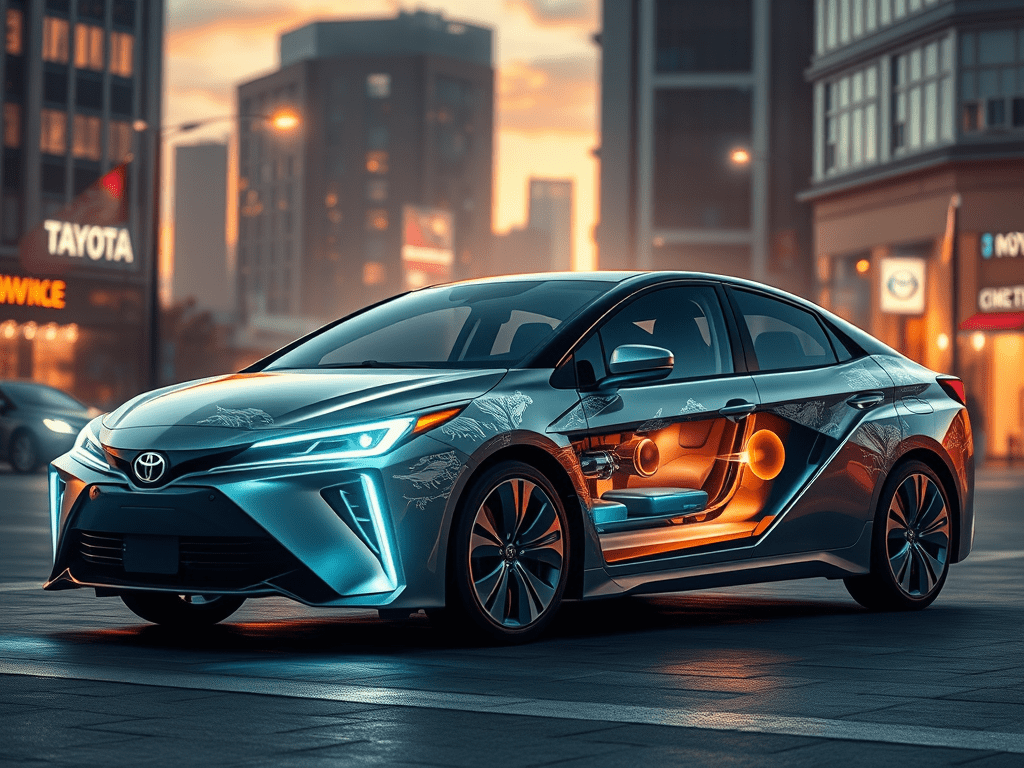
As the world accelerates toward sustainable mobility, hydrogen fuel cell technology has become a prominent contender in the race to decarbonize transportation. In the rapidly evolving landscape of electric vehicles (EVs), hydrogen fuel cell technology stands out as a promising alternative to traditional battery electric vehicles (BEVs). This blog explores the intricacies of hydrogen fuel cell technology, its application in electric vehicles (EVs), and how Toyota Mirai exemplifies its potential. The Toyota Mirai, one of the pioneering hydrogen fuel cell vehicles (FCVs), showcases the potential of hydrogen as a clean energy source for transportation. Additionally, we’ll delve into the structure of fuel cells and the production of green hydrogen.
What is Hydrogen Fuel Cell Technology?
A hydrogen fuel cell generates electricity through a chemical reaction between hydrogen and oxygen. Unlike internal combustion engines that burn fuel, fuel cells undergo an electrochemical process that produces electricity, water, and heat as byproducts. The core component of this technology is the Proton Exchange Membrane (PEM) fuel cell, which efficiently converts hydrogen into electrical power.
How Does It Work?
- Hydrogen Supply: The vehicle stores hydrogen gas in high-pressure tanks.
- Fuel Cell Stack: Hydrogen is supplied to the anode of the fuel cell stack where it splits into protons and electrons.
- Proton Exchange Membrane (PEM): The PEM allows only protons to pass through to the cathode, while electrons flow through an external circuit, generating electricity.
- Oxygen Intake: Oxygen from the air is drawn into the cathode where it reacts with protons and electrons to produce water and heat.
- Power Generation: The generated electricity powers the electric motor, propelling the vehicle.

The Technical Structure of a Hydrogen Fuel Cell
A hydrogen fuel cell is an electrochemical device with multiple components working in unison to convert hydrogen into electricity. The main parts include:
1. Anode: The anode is where the hydrogen gas enters the fuel cell. Here, a catalyst (often platinum) splits the hydrogen molecules into protons and electrons.
- Role: The anode receives hydrogen gas (H₂), which is split into protons (H⁺) and electrons (e⁻) through a catalyst (usually platinum).
- Reaction: H2 → 2H++2e−
2. Electrolyte (Proton Exchange Membrane): The electrolyte is a proton exchange membrane (PEM) that allows only the protons to pass through to the cathode side while blocking electrons. This separation creates the electrical current.
- Role: A solid polymer electrolyte membrane (PEM) allows only protons to pass through to the cathode while blocking electrons.
- Material: Made from materials like Nafion, which ensure high proton conductivity and durability.
3. Cathode: The cathode is where oxygen (from the air) enters the fuel cell. The oxygen reacts with the protons that have travelled through the electrolyte and the electrons that have travelled through the external circuit, forming water.
- Role: Oxygen (O₂) from the air reacts with protons (H⁺) and electrons (e⁻) at the cathode, forming water (H₂O) as the byproduct.
- Reaction: O2+4H++4e− → 2H2O
4. Catalyst: Typically made of platinum, the catalyst at both the anode and cathode speeds up the reactions at these electrodes.
- Role: Speeds up reactions at the anode and cathode.
- Challenges: Platinum is efficient but expensive, leading to research into alternative materials.
5. Bipolar Plates: These plates help distribute the gases evenly over the surface of the electrodes and also conduct the electrons from one cell to another in the stack.
- Role: Conduct electrons and distribute gases (H₂ and O₂) across the cell.
- Material: Typically made of graphite or metal alloys.
6. Fuel Cell Stack: A fuel cell stack is the core of a fuel cell system. It consists of multiple individual fuel cells arranged in series. The stack is made by loading single fuel cells on top of one another.
- Role: Individual cells are stacked to generate sufficient voltage and power for an EV.
- Output: The stack converts hydrogen energy into electrical energy to drive the motor.
Advantages of Hydrogen Fuel Cells
- Eco-Friendly: The only byproducts are water and heat, making it an environmentally friendly option due to zero tailpipe emissions.
- High Efficiency: Fuel cells are more efficient than internal combustion engines, especially under part-load conditions.
- Fast Refuelling: Hydrogen tanks can be refilled in minutes, similar to refuelling a gasoline vehicle.
- Energy Dense: Hydrogen has a high energy density, enabling longer ranges.
- Extended Range: Hydrogen fuel cell vehicles (FCVs) typically offer a longer range compared to battery electric vehicles.
- Durable Systems: Fuel cells can operate efficiently over long durations.
Hydrogen Production: How to Make it Green
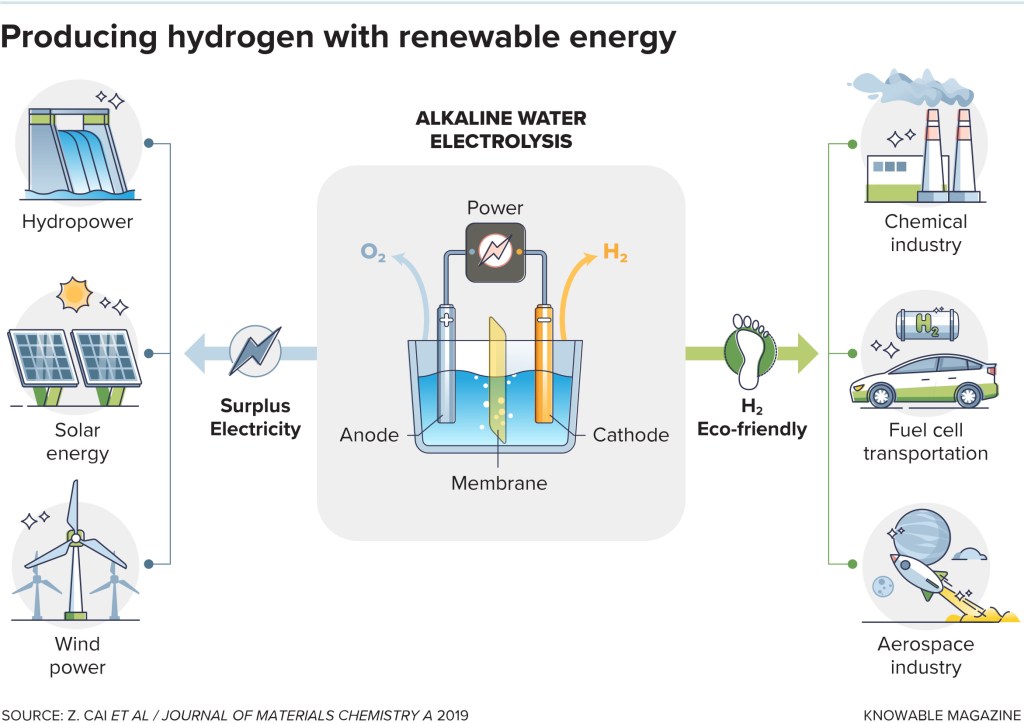
Hydrogen can be produced through several methods, but not all are environmentally friendly. Here’s how green hydrogen is created and why it’s crucial for sustainable fuel cells:
1. Electrolysis
- Process: Splits water (H₂O) into hydrogen (H₂) and oxygen (O₂) using electricity.
- Green Aspect: When powered by renewable energy (e.g., wind, solar, hydro), the process emits zero carbon.
- Equation: 2H2O → 2H2+O2
2. Photolysis
- Process: Uses sunlight to split water molecules directly.
- Status: Still in the research stage but holds promise for large-scale green hydrogen production.
3. Biomass Gasification
- Process: Converts organic matter into hydrogen-rich gases using high temperatures in a controlled environment.
- Green Aspect: Uses renewable biomass, reducing dependency on fossil fuels.
4. Wind-to-Hydrogen
- Process: Similar to solar, wind energy can be used to power electrolysers to produce hydrogen.
- Green Aspect: This method leverages the intermittent nature of wind energy to produce hydrogen when wind power is available.
Green Hydrogen vs. Other Types
- Green Hydrogen: Produced using renewable energy; zero emissions.
- Grey Hydrogen: Derived from natural gas, with CO₂ emissions.
- Blue Hydrogen: Similar to grey, but carbon capture technology mitigates emissions.
To scale green hydrogen, investments in renewable energy sources and electrolyser technologies are essential.
Advantages of Green Hydrogen
- Zero Emissions: Producing green hydrogen results in no greenhouse gas emissions, making it a clean energy source.
- Energy Storage: Hydrogen can be stored and transported, providing a solution for energy storage and grid balancing.
- Versatility: Green hydrogen can be used in various sectors, including transportation, industrial processes, and power generation.
Toyota Mirai: A Technological Marvel
The Toyota Mirai is one of the most well-known hydrogen fuel cell vehicles. Introduced in 2014, it has been a trailblazer in demonstrating the feasibility and advantages of hydrogen as a fuel source. The Toyota Mirai showcases how hydrogen fuel cell technology can deliver practical, efficient, and eco-friendly transportation.
- Design and Performance: The Mirai features a sleek, futuristic design and is powered by Toyota’s proprietary fuel cell system. It offers a driving range of approximately 650 kilometers (400 miles) on a full tank of hydrogen.
- Fuel Cell Stack: The Toyota Fuel Cell System (TFCS) combines fuel cell technology with hybrid technology. The stack generates up to 153 horsepower, providing a smooth and efficient driving experience.
- Safety: The Mirai is equipped with multiple safety features, including robust hydrogen tanks that are designed to withstand severe impacts and prevent leaks.
- Environmental Impact: With zero tailpipe emissions, the Mirai significantly reduces the environmental footprint compared to conventional vehicles.

Key Technical Specifications
- Fuel Cell Stack Efficiency
- High efficiency through Toyota’s proprietary catalyst designs and durable electrolyte membranes.
- Generates electricity at ~60% efficiency compared to internal combustion engines (~25-30%).
- Hydrogen Storage Tanks
- Mirai’s tanks can hold hydrogen at 10,000 psi (700 bar).
- Made from carbon-fiber-reinforced plastic for high strength and safety.
- Energy Management System
- Integrates a high-voltage battery to assist during peak power demands, ensuring smooth acceleration.
- Refuelling and Range
- Refuels in under 5 minutes and delivers up to 402 miles (647 km) on a single tank.
Real-World Impact
- Infrastructure: Toyota has partnered with governments and private sectors to expand hydrogen refuelling stations.
- Sustainability: By combining green hydrogen production with fuel cells, Toyota Mirai represents a truly zero-emission vehicle.
Challenges
- Hydrogen Infrastructure: The lack of hydrogen refuelling stations and production facilities is a significant barrier.
- Cost of Green Hydrogen: Current production is expensive compared to fossil fuels. Especially, green hydrogen production is more expensive than traditional hydrogen production methods.
- Materials in Fuel Cells: Platinum and other catalysts are costly.
- Efficiency: Improving the efficiency of electrolysers and other production methods is crucial for widespread adoption.

Toyota and other automakers are addressing these hurdles by reducing material costs, improving electrolyser technologies, and collaborating to expand hydrogen infrastructure.
The Path Forward
Hydrogen fuel cell technology, when paired with green hydrogen production, has the potential to revolutionize transportation. Hydrogen fuel cell technology represents a significant step forward in the quest for sustainable and clean energy in the transportation sector. Vehicles like the Toyota Mirai demonstrate that this is not a futuristic dream but a present-day reality. The Toyota Mirai exemplifies the potential of this technology, offering a practical and eco-friendly alternative to traditional vehicles. By advancing infrastructure and reducing costs, hydrogen could become a cornerstone of global decarbonization efforts. While there are challenges to overcome, the advancements in fuel cell technology and growing interest in hydrogen as a fuel source pave the way for a cleaner and greener future.
References
- Toyota Official Website – Toyota Mirai Features
- U.S. Department of Energy – Hydrogen and Fuel Cell Technologies
- ResearchGate – Advances in Green Hydrogen Production Methods
- Toyota Global Newsroom
- Hydrogen Council
 amplev.in
Leave a comment